
Responsible Yachting at Greenline Yachts
From materials and production to onboard energy use and operation, we consider how each design decision can improve efficiency and reduce resource use.


Greenline Yachts approaches Responsible Yachting through specific technologies and practices designed to reduce fuel consumption, generator use and onboard energy demand.
Hybrid and electric propulsion, integrated solar generation, battery storage and energy management work together to provide different ways of producing and using energy on board. Beyond propulsion, our approach also includes selected production, material reuse and operational practices.
For us, Responsible Yachting means focusing on measurable improvements and clearly explaining what each technology or practice can achieve.
At Greenline Yachts, we continue to develop our approach to Responsible Yachting through hybrid and electric propulsion, integrated solar generation, battery storage, onboard energy management and selected production practices.
Together, these solutions are designed to reduce fuel consumption, generator operating time and onboard energy demand, while continuously improving the way our yachts use energy and resources.


From materials and production to onboard energy use and operation, we consider how each design decision can improve efficiency and reduce resource use.

We select materials based on technical performance, weight, durability, cost and documented material characteristics.
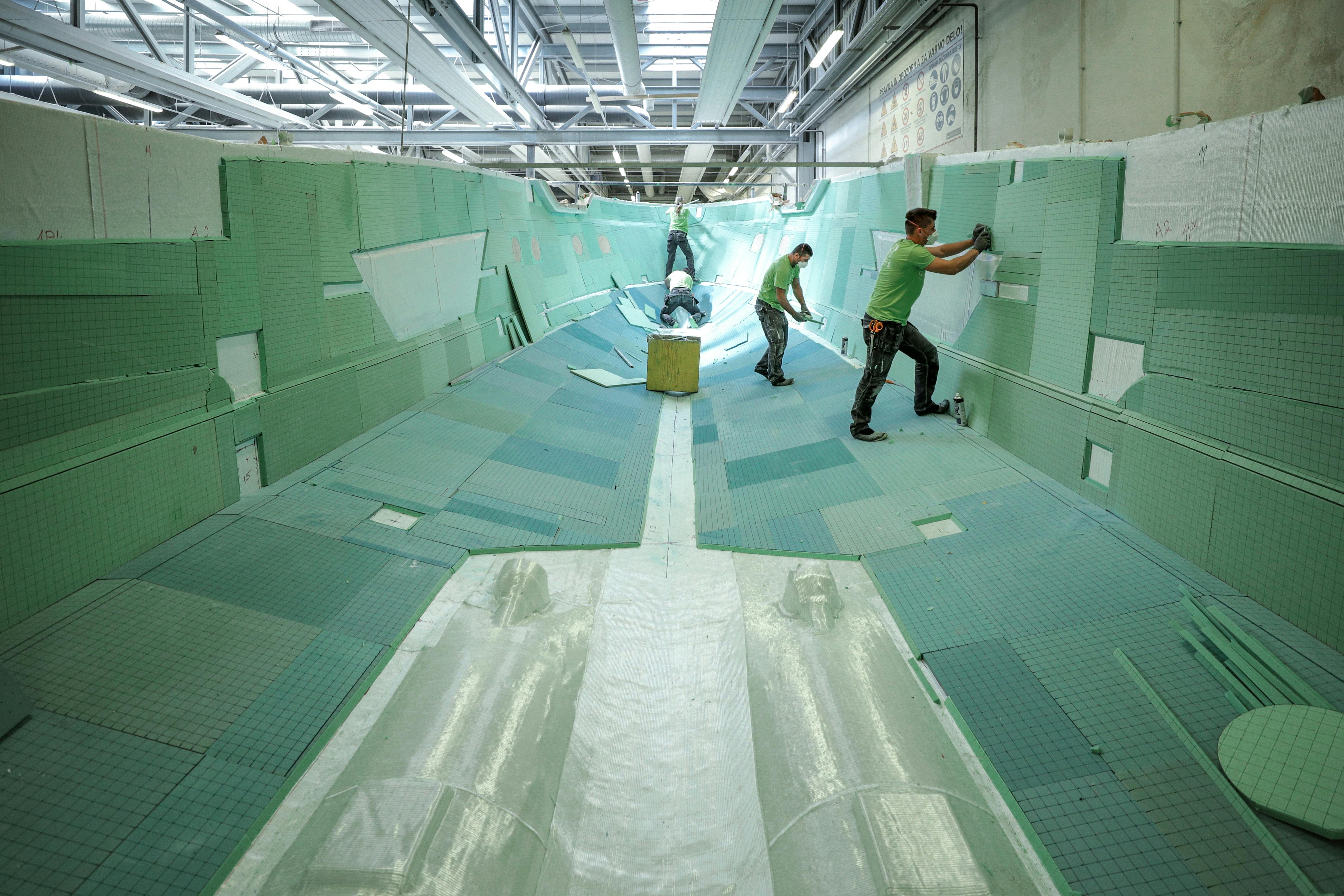
Where technically suitable, we use materials containing recycled content, including foam cores made partially from recycled PET. We also use certified low-emission resins where applicable, while ensuring that all selected materials meet our structural, quality and performance requirements.
Transparency is at our core.
We report on selected Responsible Yachting initiatives, technologies and production practices in our annually published Responsible Yachting Report.
With a focus on lightweight solutions, we aim to reduce vessel weight, which can contribute to lower propulsion energy demand and fuel consumption, depending on the yacht's configuration and operating conditions.

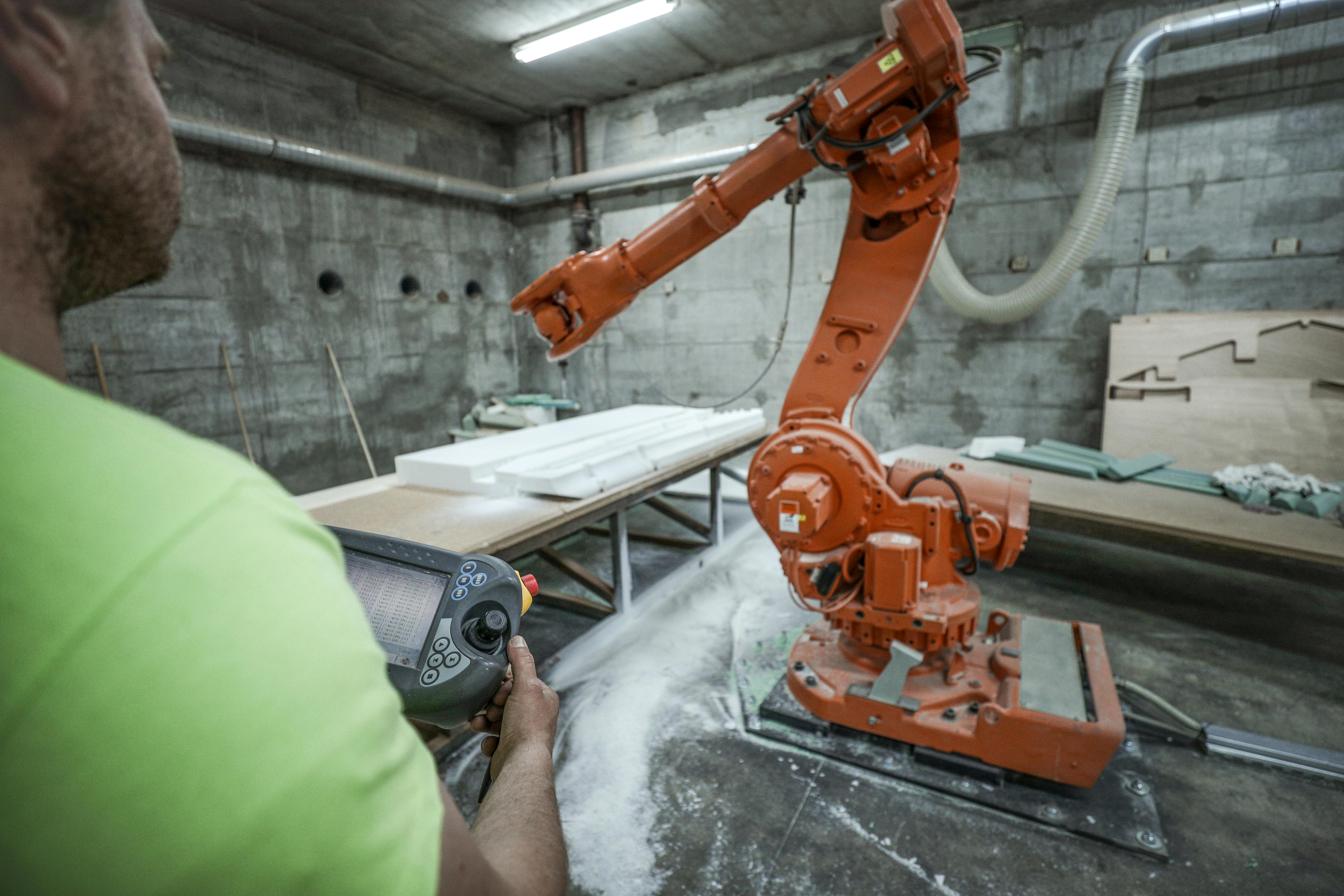
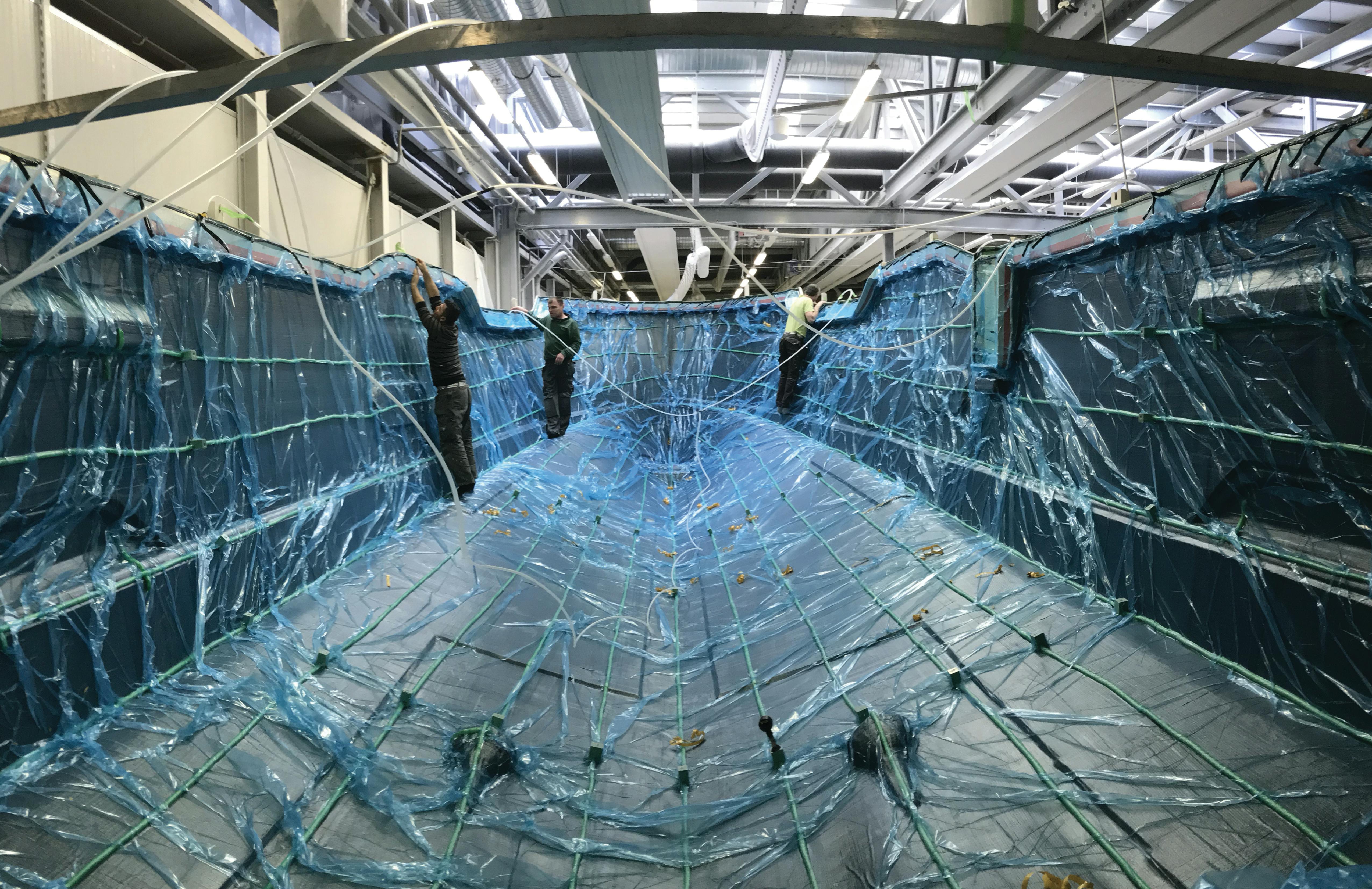
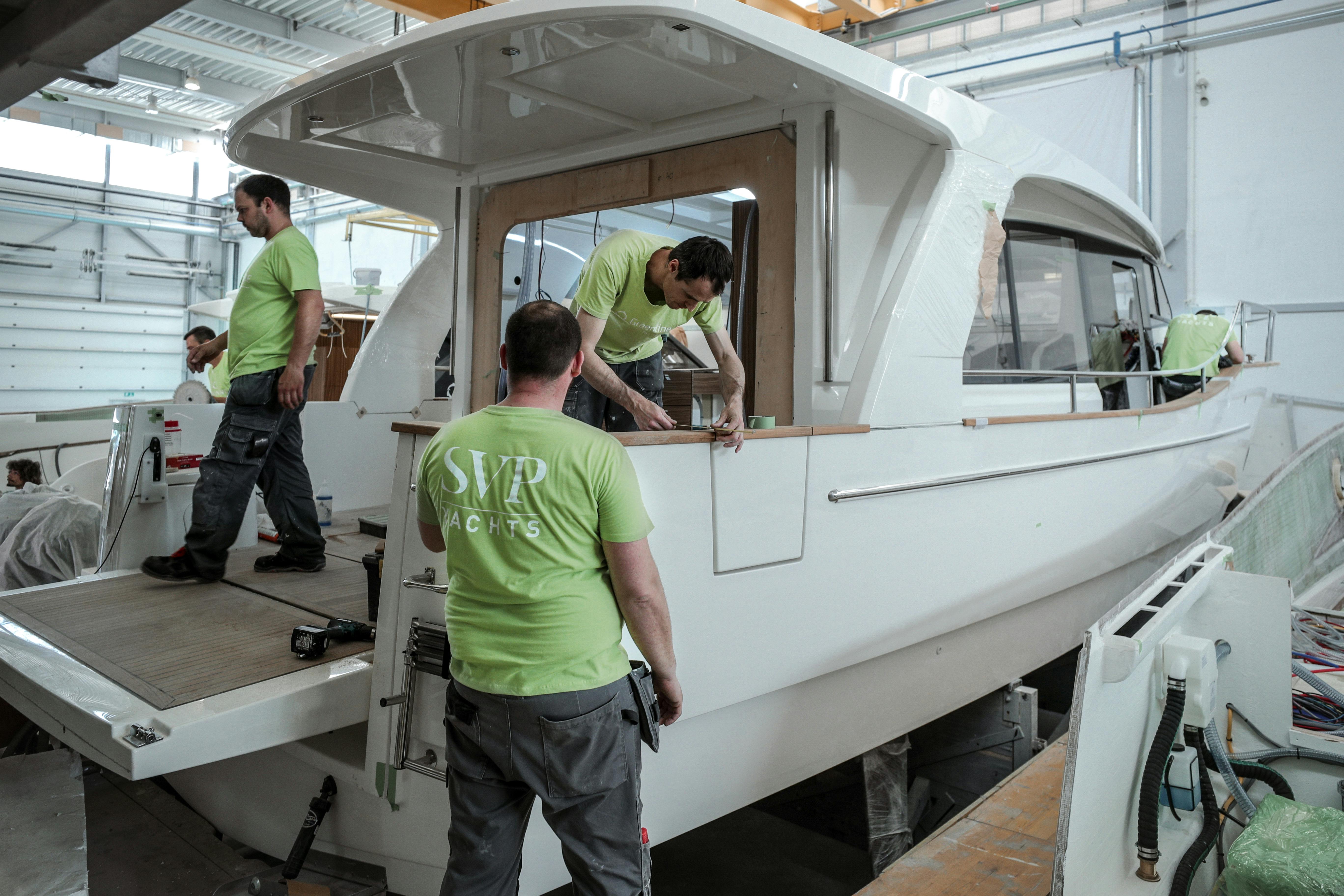
Our production process uses vinyl-ester resin and vacuum infusion for the majority of GRP components, allowing more controlled resin distribution and a consistent fibre-to-resin ratio compared with traditional hand lamination.
Vacuum Infusion Technology is used for the production of the majority of our GRP parts. The closed-mould process helps control resin use and can reduce worker exposure to resin vapours during lamination compared with open-mould hand lamination.
Composite performance: A fibre-to-resin ratio of approximately 60/40 supports consistent laminate properties while helping control component weight.
Responsible manufacturing at Greenline Yachts means continuously evaluating our production methods with a focus on material use, process control, product quality and working conditions.

We believe that a motivated and well-supported workforce is essential to both a positive working environment and high-quality yacht production. We focus on employee well-being, workplace comfort, safety and professional development to support our team in delivering consistent craftsmanship.
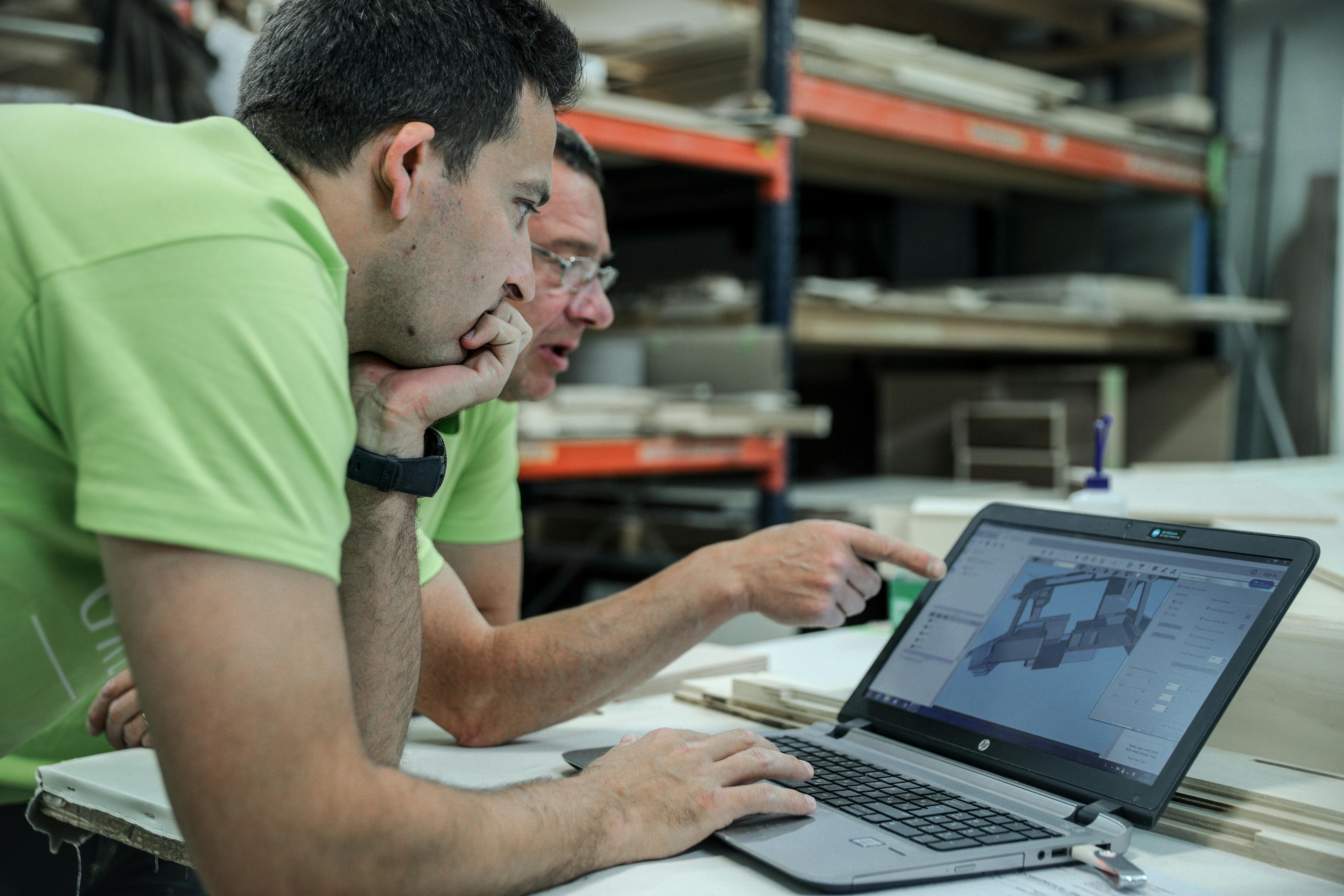
We provide ongoing training and development opportunities to help employees maintain and develop the skills and knowledge required for yacht production, new technologies and evolving manufacturing processes.
We support employee well-being through sports and recreational activities, including cycling, hockey and other initiatives that encourage an active lifestyle.
Our yacht furniture is built using an inner-line tray system, which improves working conditions during assembly by reducing the amount of work that needs to be carried out inside the hull in confined or crouched positions.

Since 2008, Greenline Yachts has developed hybrid propulsion systems designed to combine diesel cruising performance with the option of quiet electric operation at lower speeds.
Our diesel propulsion options include HVO-compatible engines on selected models and configurations. For customers choosing hybrid propulsion, the Greenline H-Drive combines conventional diesel propulsion with electric motors, battery storage and onboard energy management.
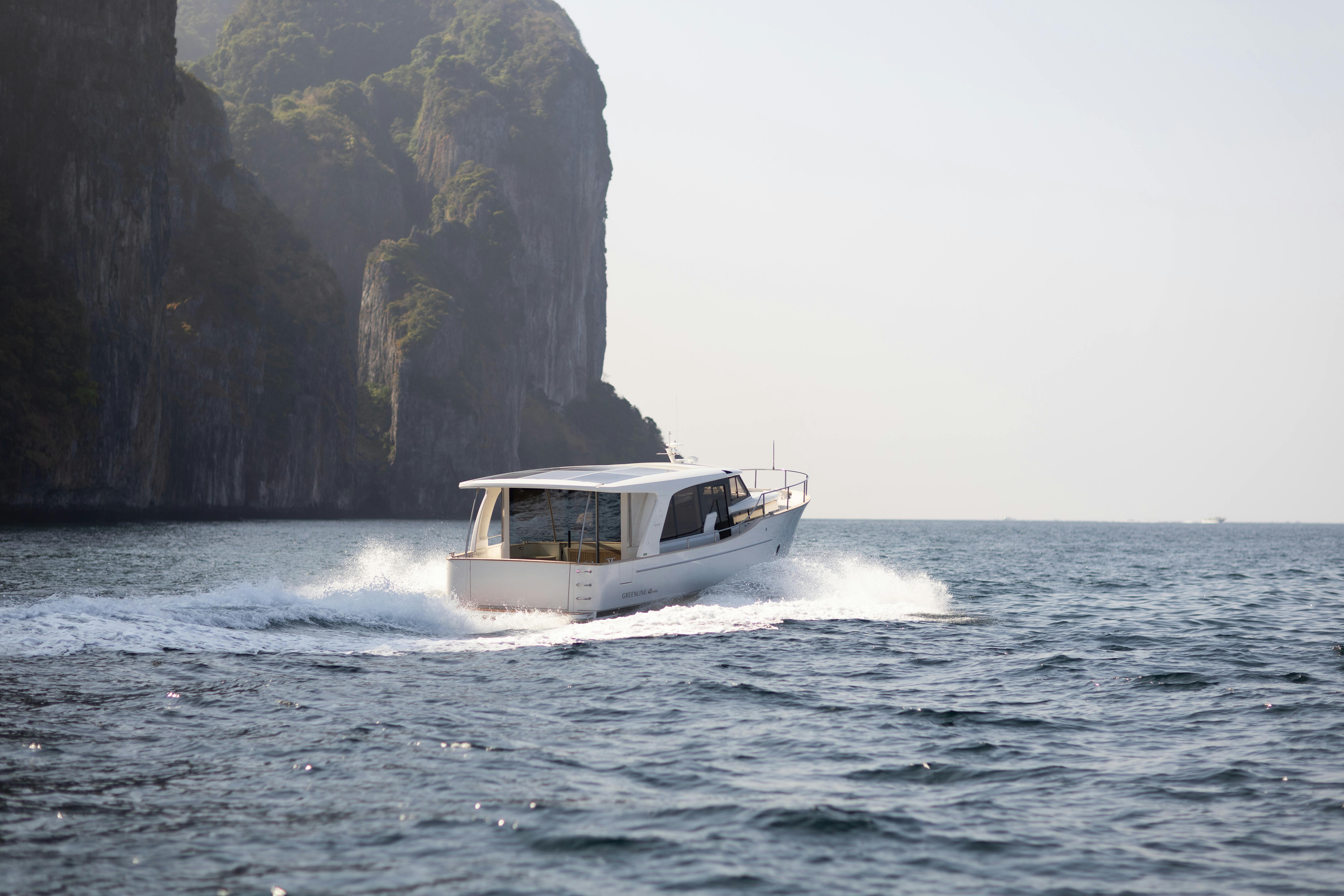
Our parallel hybrid system combines diesel and electric propulsion in one drivetrain. Diesel engines provide the range and speed required for longer passages, while electric mode allows low-speed operation without running the diesel engines, eliminating propulsion-engine exhaust emissions, noise and vibration during electric operation.
Selected HVO-compatible engines can operate on HVO fuel, subject to the engine manufacturer's specifications and fuel availability. The lifecycle greenhouse-gas performance of HVO depends on the feedstock, production pathway and fuel certification. Where a specific emissions reduction is communicated, it should be based on the documented fuel specification and calculation methodology used.
While we previously offered pure electric propulsion, our current focus for cruising yachts is parallel hybrid propulsion. This configuration combines diesel propulsion for longer passages with electric operation at lower speeds, without requiring the diesel engines to run during electric propulsion.
The data below is calculated from the assumption that the owners spend 90 days on board.
During this period:







This comparison is based on Greenline Yachts' internal calculations and operating data using the modelled 90-day operating scenario shown above. It compares a Greenline 45 Coupe with conventional diesel propulsion with a Greenline 45 Coupe equipped with the Greenline 6G H-Drive and solar generation. Direct CO₂ values are calculated from onboard fuel consumption. Actual fuel consumption and emissions vary depending on engine configuration, speed, load, operating profile, weather, solar irradiation, onboard electrical demand and other operating conditions.


Integrated solar systems are available across the Greenline range, with installed capacity depending on the yacht model and configuration. Solar-generated electricity contributes to charging the onboard battery bank and supplying onboard electrical loads.
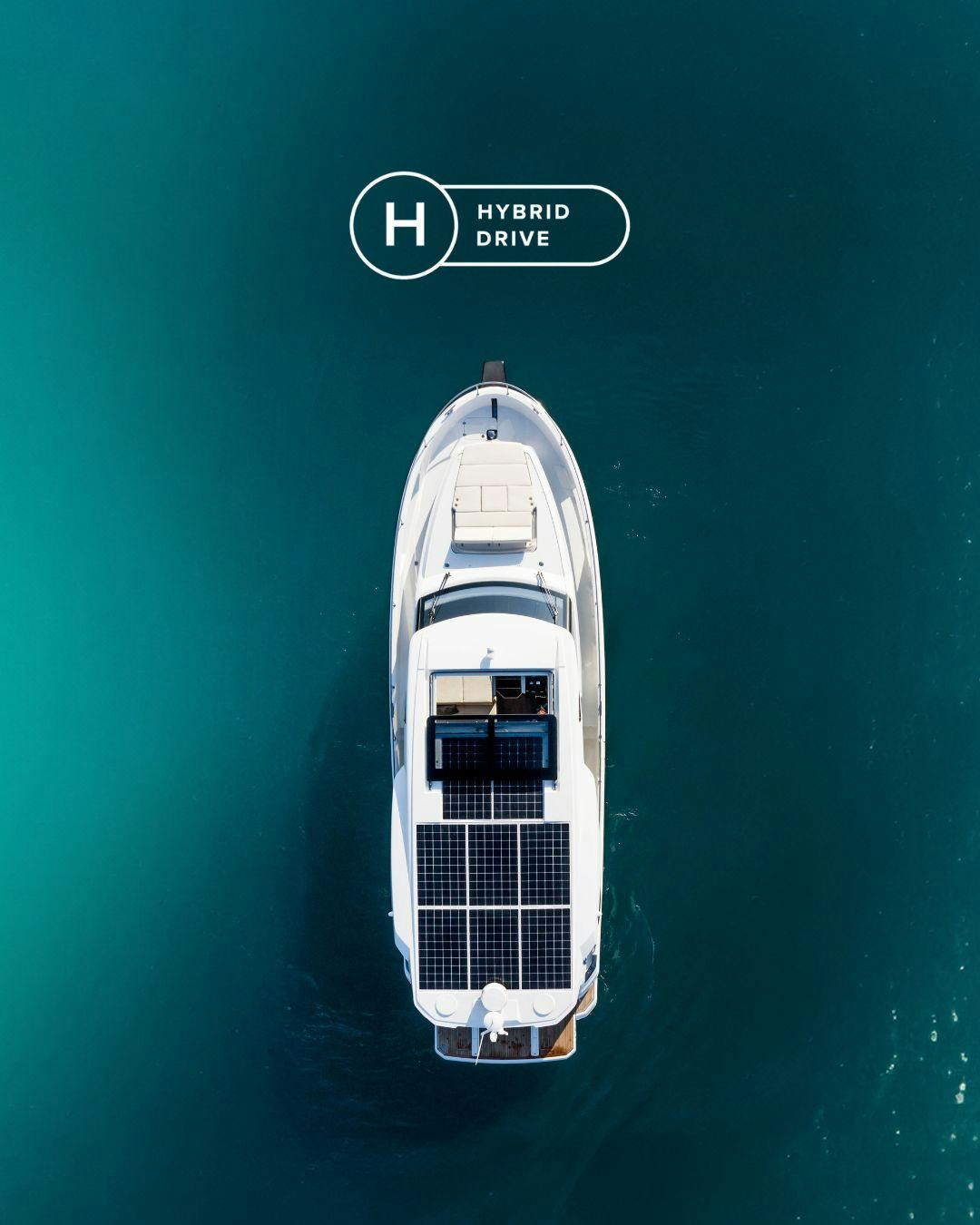
In electric propulsion mode, the diesel engines remain off, eliminating propulsion-engine exhaust emissions, noise and vibration while the yacht is driven electrically.
Solar panels are integrated into the yacht’s structure rather than added as external equipment, with forced-air cooling designed to support panel performance. Electricity generated by the solar system contributes to charging the domestic battery bank and can reduce generator operating time, depending on solar conditions, battery capacity and onboard energy demand.
Our hybrid systems use lithium battery technology to store energy from solar generation, shore power and the propulsion system, depending on the yacht configuration. We continue to evaluate new battery technologies as part of the development of our onboard energy systems.

Our Responsible Yachting approach also includes selected production and office practices focused on reducing waste and increasing material reuse where practical.
Recycling and waste separation are part of both our production and office practices. Where suitable, we select office materials containing recycled content and work to reduce unnecessary material use.
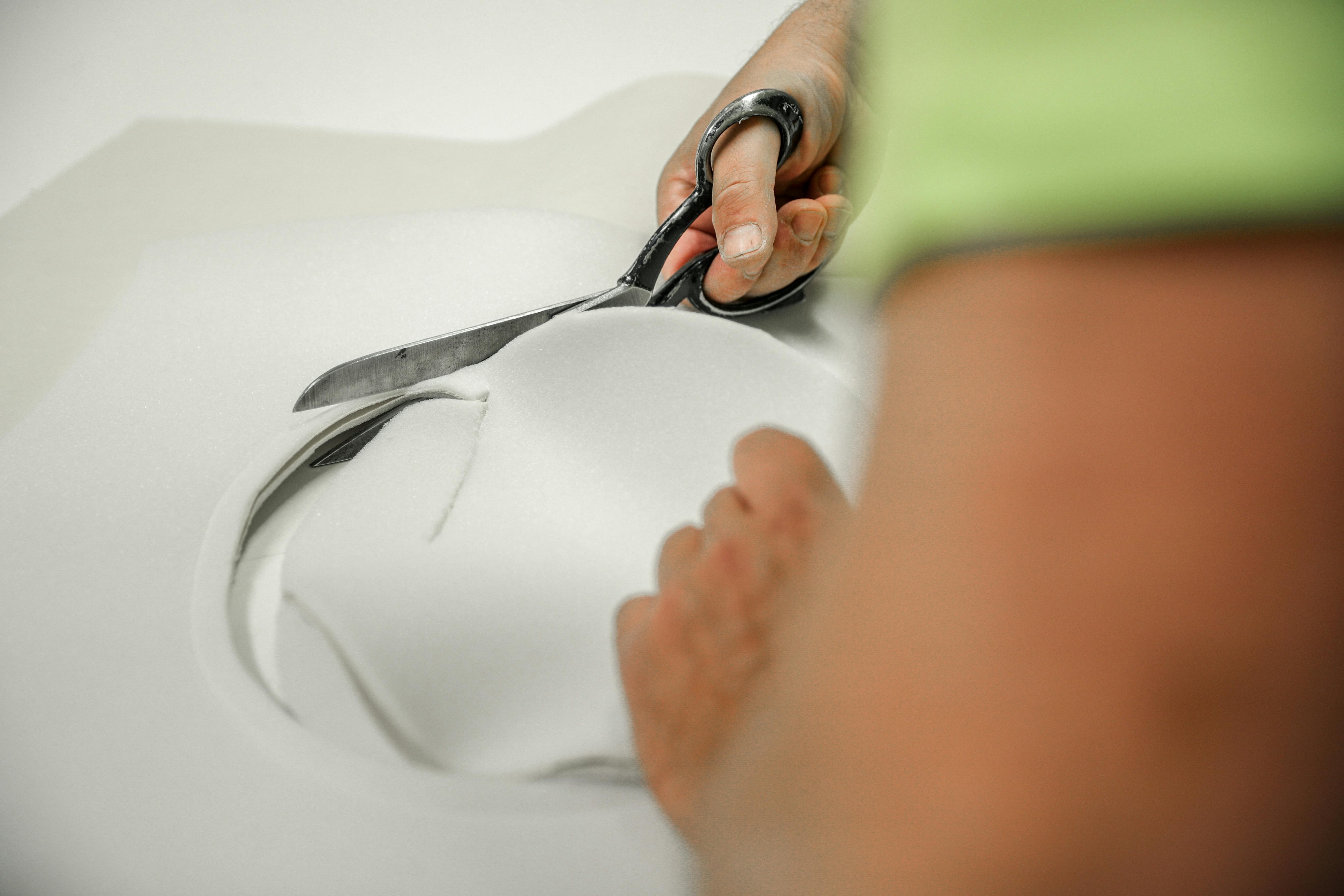
Selected production offcuts are reused or repurposed where suitable. Foam offcuts are repurposed for insulation, while wood waste from carpentry is shredded and pressed into heating pellets.
Each Greenline Yacht is supplied with selected boat-care products and waste bags chosen according to our onboard-use requirements.

Our Responsible Yachting approach also considers onboard equipment, energy use and selected products used across our operations.
We consider electrical consumption when selecting household appliances and onboard electronics, helping manage the yacht’s overall hotel load while maintaining onboard comfort.
In our marketing activities, we avoid single-use plastic merchandise where practical and have reduced our use of printed marketing materials.
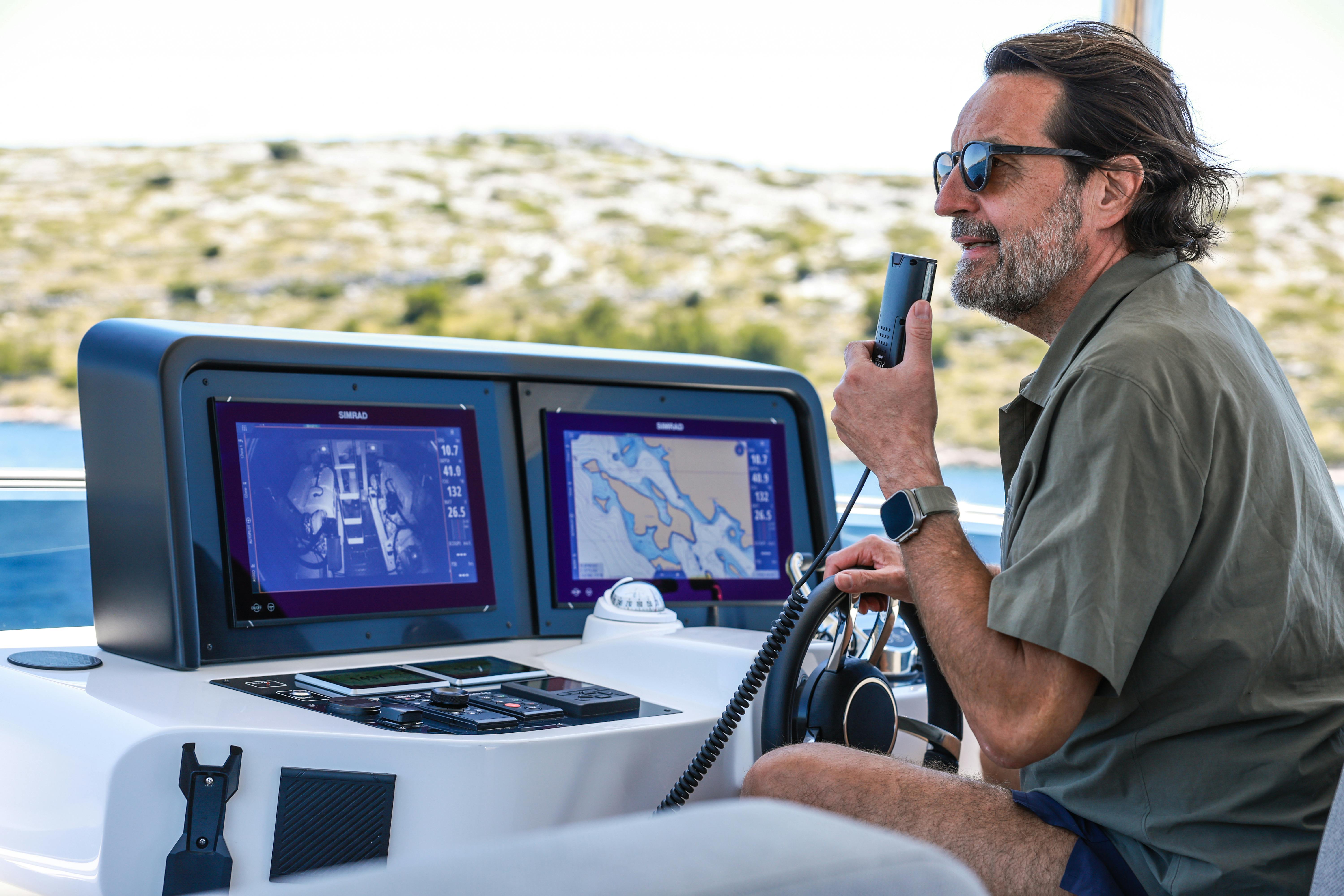

How a yacht is operated directly affects fuel consumption, onboard energy use and propulsion noise. Through our Responsible Captain initiative, we share practical guidance to help owners understand how speed, weight, route planning and propulsion mode influence yacht operation.
Efficient cruising
We provide guidance on cruising techniques that can reduce fuel consumption, including appropriate speed selection and efficient use of the propulsion system.
Weight on board and fuel consumption
We explain how additional weight can affect fuel consumption, helping owners make informed decisions about loading and voyage planning.
Engagement programs
We encourage owners to engage with efficient operating practices through educational activities, challenges and competitions.
Silent cruising
Electric propulsion allows low-speed operation without running the diesel engines, reducing propulsion-engine noise during electric cruising. Through the Responsible Captain initiative, we also raise awareness of underwater noise and its relevance to marine environments.
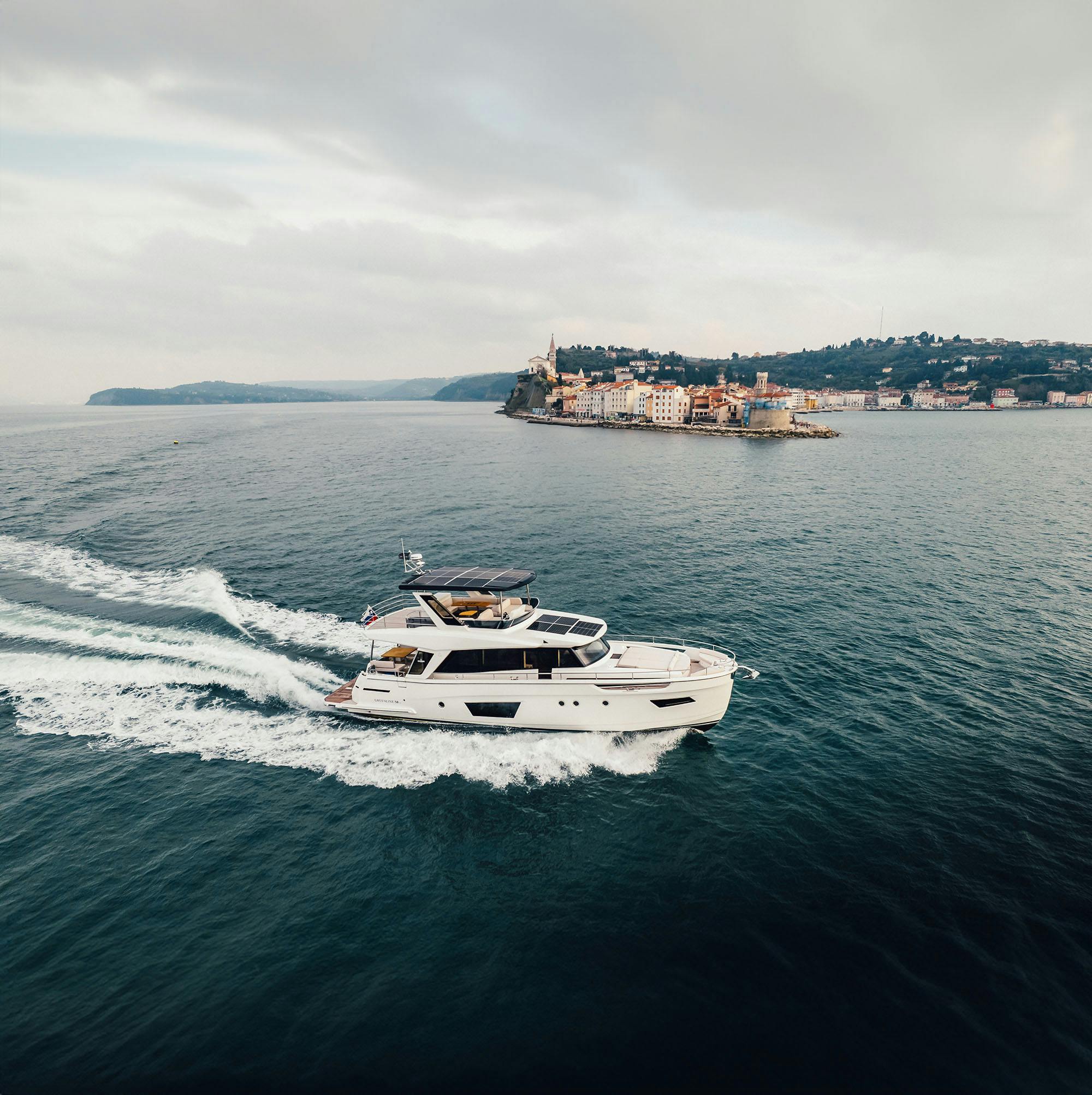
The Responsible Yachting Report provides a transparent overview of selected initiatives, technologies and production practices related to hybrid propulsion, solar generation, onboard energy use and material reuse.